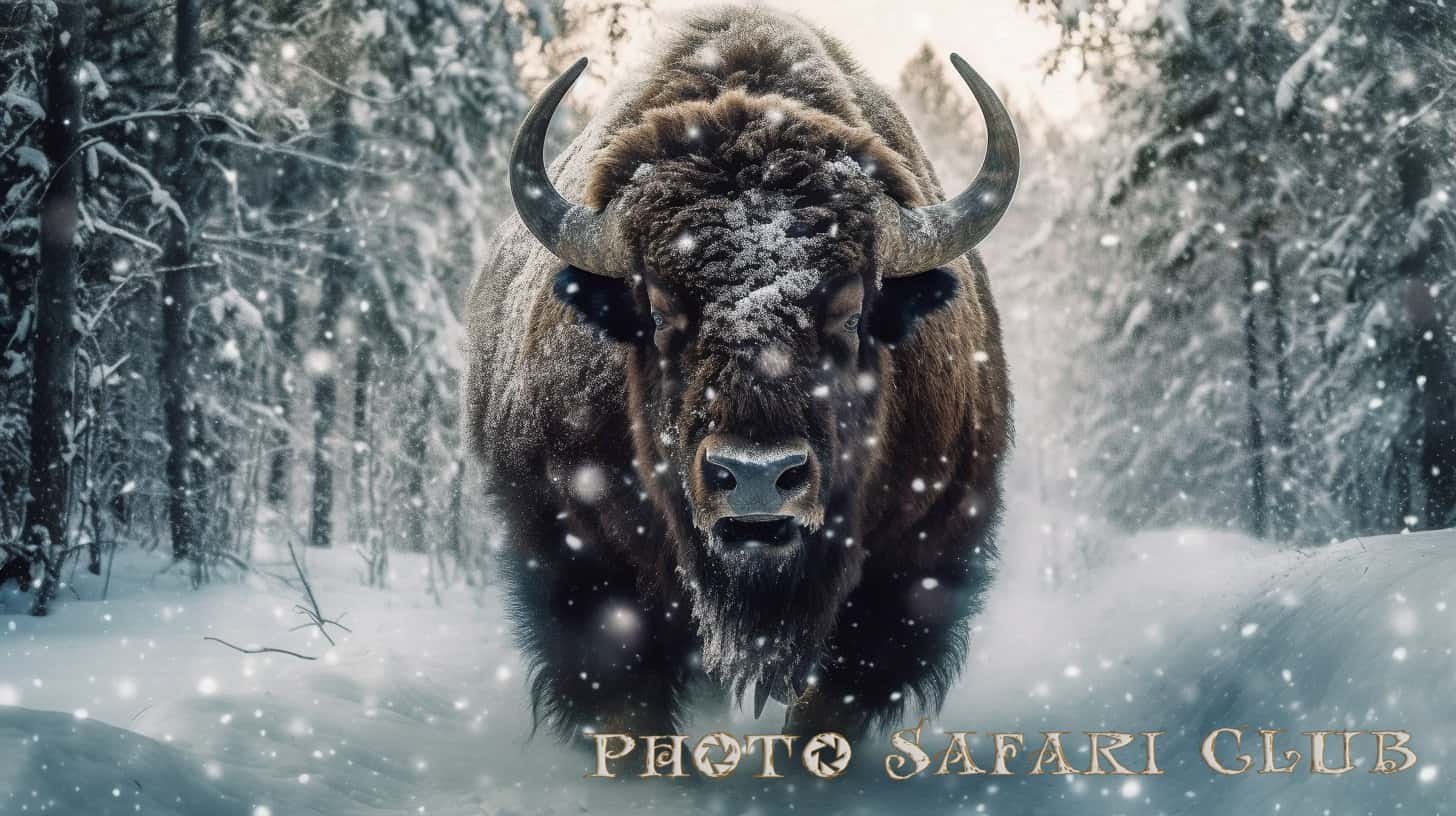

Rescuing the Lost: European Bison
Welcome to the captivating world of the Photo Safari Club, where we invite you to embark on an exhilarating journey through Bulgaria’s wildlife.
I hereby extend a warm welcome to you at the Photo Safari Club. The day’s exhilarating foray carries us through the mystical forests which weave from Stara Planina to the Danube Plain in Bulgaria, resting in the heart of Eastern Europe.
Sani Doncheva, a celebrated photojournalist, stands as our guide on this remarkable familial photo safari. A fervent image-catcher, Sani has encapsulated the allure of myriad animal species in her lens from across the globe’s diverse geographies. The grandeur of the majestic European bison, the grandest beast that graces the European continent, is our quintessential pursuit today. Snapping this extraordinary creature concludes Sani’s exhaustive visual anthology of Bulgaria’s large wild fauna. This achievement nudges her closer to the coveted accomplishment of the full collection famously known as Europe’s Dangerous 5. Thanks to the benevolence of Bulgaria’s most extensive wildlife estate, this mesmerizing photo safari has been made possible. They tirelessly work towards preserving wildlife habitats, given their pivotal role in the fiscal interests of global hunting organizations. Our mission is to showcase how photo safaris can invoke the same level of fiscal excitement for wildlife preservation.
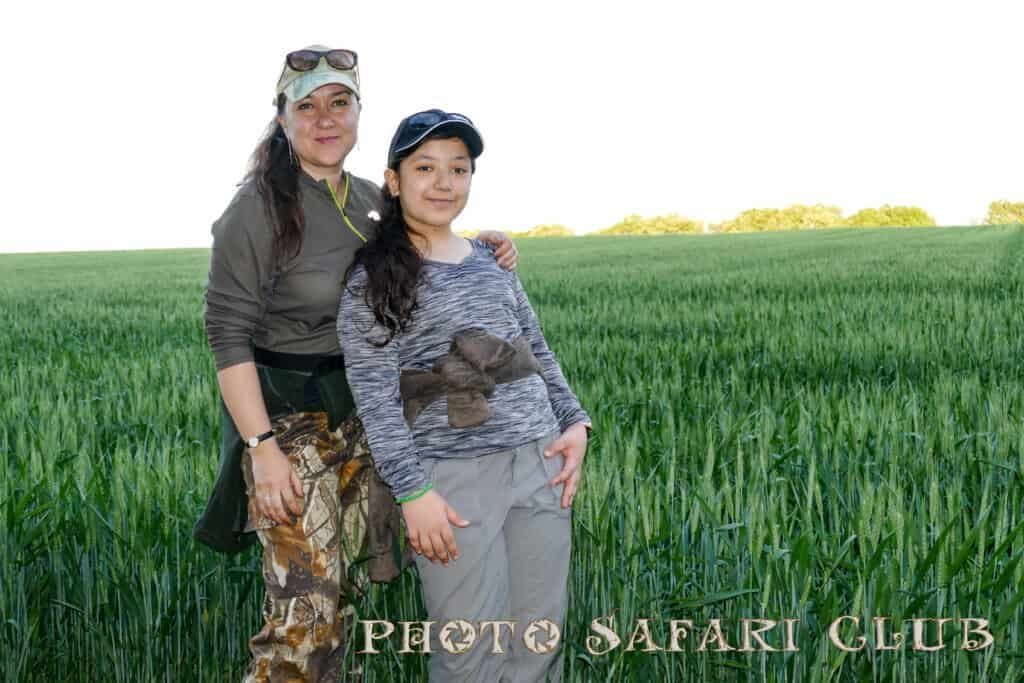
I, Yana, am Sani’s offspring and will be your narrator throughout this tale. As a girl of seventeen summers, smitten with wildlife photography, I embarked on an extraordinary adventure with my progenitors who are skilled wildlife videographers and photographers. We journeyed to a wild forest adjacent to the majestic Danube River. Our purpose was twofold: to capture the awe-inspiring European bison, one of Europe’s most endangered species, and to compile a documentary in celebration of their survival saga. Over a span of three dynamic days, we marveled at the majesty of nature, encountering an array of captivating creatures such as red deer, fallow deer, and wild boar. Allow me to guide you through our unforgettable photo safari, dotted with thrilling moments and extraordinary encounters.
Day 1: The Voyage Commences
As the sun sank behind the horizon, it cloaked the forest in golden hues. Brimming with anticipation and armed with our camera gear, we embarked on our inaugural expedition. The lush foliage and tranquil ambiance immediately enraptured us, evoking a profound connection with the natural world. As we delved deeper into the forest, each step heightened our excitement, aware of our trespass into the dominion of elusive, awe-inspiring fauna.
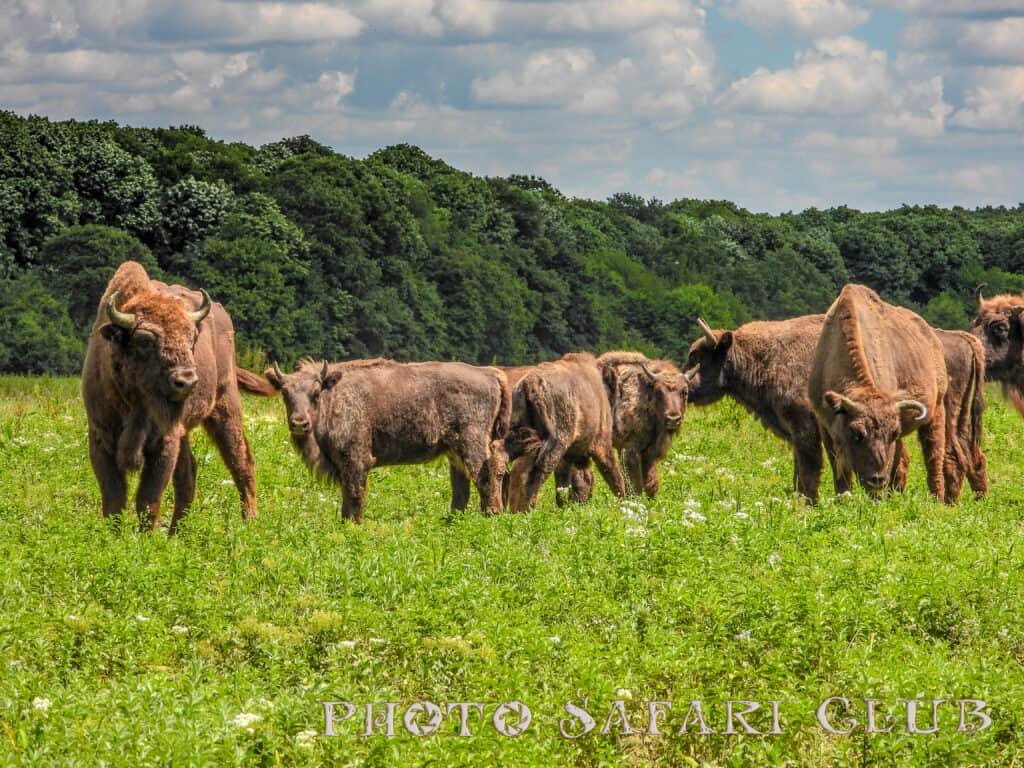
In the vast meadow, bathed in the afternoon sun’s beams, the red deer and the bison, the region’s two grandest species, found their sanctuary. Harmoniously they grazed, undisturbed until our arrival. Only a handful of creatures took heed of our presence, while the rest maintained their serenity and continued grazing. As we awaited the moment when these wild inhabitants would grow comfortable with our alien presence, we planned to cautiously approach and capture their portraits. For the time being, the distance permitted only general and panoramic shots. Skillfully we used the tree and bush silhouettes to navigate towards better vantage points. The sight of the majestic red deer, their antlers bedecked with moss, was a sight to behold.
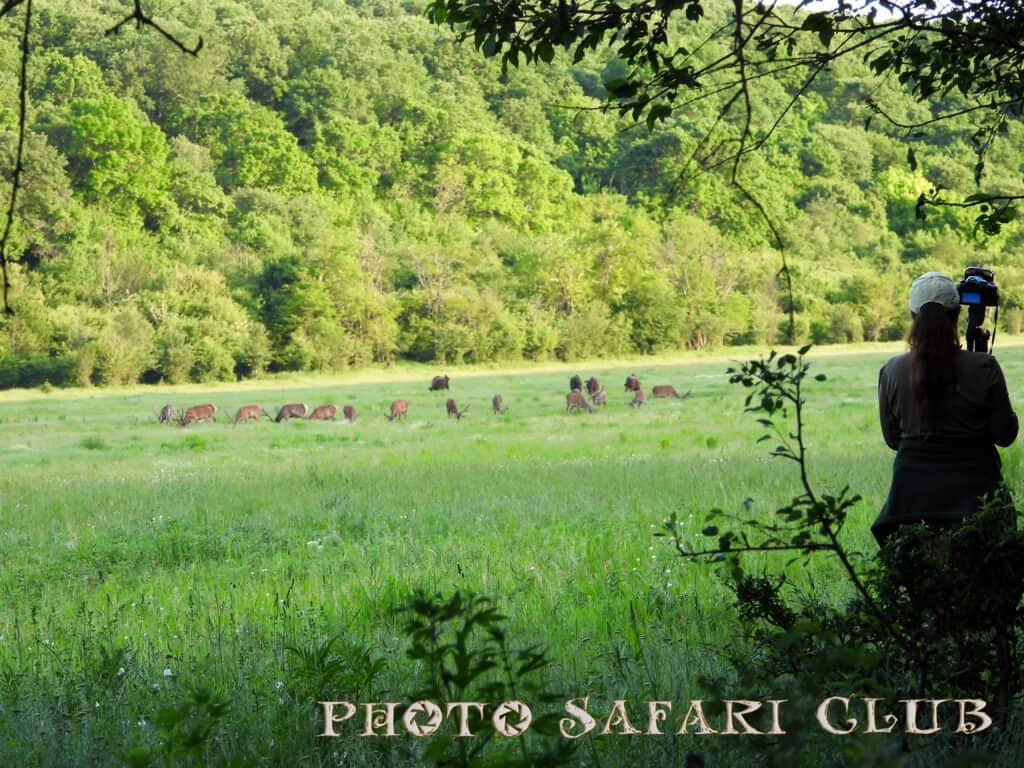
In order to complete the collection of molting species, the Photo Safari Club mandated a photograph of male specimens displaying mossy and peeled antlers. We eagerly hoped to snap pictures of both types of creatures, aware of the need to close the gap, even though the open meadow seemed to challenge us.When the sun took shelter behind the trees, no longer blinding the fauna, they swiftly took note of our presence. The red deer were the first to flee, followed by the bison. Despite our initial endeavor yielding positive outcomes, the lack of close-ups was regrettable.
Yet, my mother, unyielding and tenacious, did not concede defeat. She daringly set off in pursuit of a distant herd of bison, leaving us behind in the verdant expanse. Her stealthy navigation granted her a few moments before the bison became alert to her intrusion. Sani found herself within a stone’s throw of the wild creatures she aimed to capture. However, the beasts exuded a blend of curiosity and a dash of hostility towards the interloper.
One particular bison seemed notably perturbed. Bison are known for their volatile temperament. Were they to charge, they could easily traverse the sparse vegetation behind the image huntress. However, in the nick of time, the infuriated beast redirected its rage towards a nearby juvenile. Sani’s predicament was thus averted. Braving the perils of such close proximity, the photo huntress successfully bagged a set of unique shots showcasing the irate bison.
Day 2: European bison
Introduction:
The European bison, also known as the wisent, is a majestic and iconic species that has endured a tumultuous journey of survival. In the aftermath of World War II, the population of European bison faced near-extinction. However, through dedicated conservation efforts and the unwavering commitment of passionate individuals and organizations, these magnificent creatures have made a remarkable comeback. This article delves into the history of the European bison from the post-war era to the present day, highlighting the challenges faced and the successful conservation measures undertaken to protect and restore their populations.
Post-WWII Devastation:
After World War II, the European bison population suffered severe consequences. The war had ravaged their habitat, leaving them vulnerable and on the verge of extinction. As a result of habitat destruction, hunting, and loss of genetic diversity, their numbers dwindled to a mere handful of surviving individuals. The European bison faced an uncertain future, and urgent action was needed to ensure their survival.
Zoos and Captive Breeding Programs:
Recognizing the urgency of saving the European bison, zoos and conservation organizations played a vital role in initiating captive breeding programs. These programs aimed to safeguard the remaining individuals and increase their population through careful breeding and genetic management. Early conservationists, scientists, and wildlife experts dedicated their efforts to establishing successful breeding programs in zoos across Europe. Their expertise and commitment paved the way for the recovery of the European bison.
Reintroduction Initiatives:
Reintroduction programs played a crucial role in restoring European bison populations to the wild. Once captive breeding programs had succeeded in bolstering their numbers, the focus shifted to reintroducing them to their natural habitats. Notable reintroduction sites included various protected areas and national parks across Europe. These initiatives required extensive planning, habitat assessment, and careful monitoring to ensure the successful adaptation and survival of the reintroduced bison populations.
Conservation Partnerships and Collaborations:
The conservation of European bison became a collaborative effort involving governmental agencies, non-profit organizations, and local communities. International collaborations and partnerships were formed to coordinate conservation actions, share knowledge and resources, and ensure the long-term survival of the species. Protected areas were established, where bison populations could thrive under carefully managed conditions. Conservation strategies encompassed habitat restoration, predator management, and public engagement to promote coexistence between bison and local communities.
Population Recovery and Current Status:
Since the post-WWII era, the European bison has made a remarkable recovery. Through the collective conservation efforts, their populations have steadily increased. Current estimates suggest a growing population and a wider distribution range across different countries, including Poland, Belarus, Russia, Lithuania, and others. Ongoing monitoring efforts and research initiatives continue to provide valuable insights into the ecology, behavior, and genetic diversity of the species, helping inform future conservation actions.
Challenges and Future Perspectives:
Despite their remarkable recovery, European bison conservation still faces challenges. Habitat fragmentation remains a concern as human activities encroach upon their natural habitats. Illegal poaching and disease outbreaks pose ongoing threats to their populations. Continued conservation efforts are crucial, including habitat restoration, connectivity enhancement, and stricter law enforcement to protect these magnificent creatures. The potential of ecotourism and public awareness campaigns can play a vital role in supporting conservation initiatives and fostering local engagement.
Conclusion:
The survival and recovery of the European bison after the ravages of World War II stand as a testament to the resilience of nature and the dedication of conservationists. Through captive breeding programs, reintroduction initiatives, and collaborative efforts, these magnificent creatures have reclaimed their place in the wild. As we celebrate their resurgence, it is essential
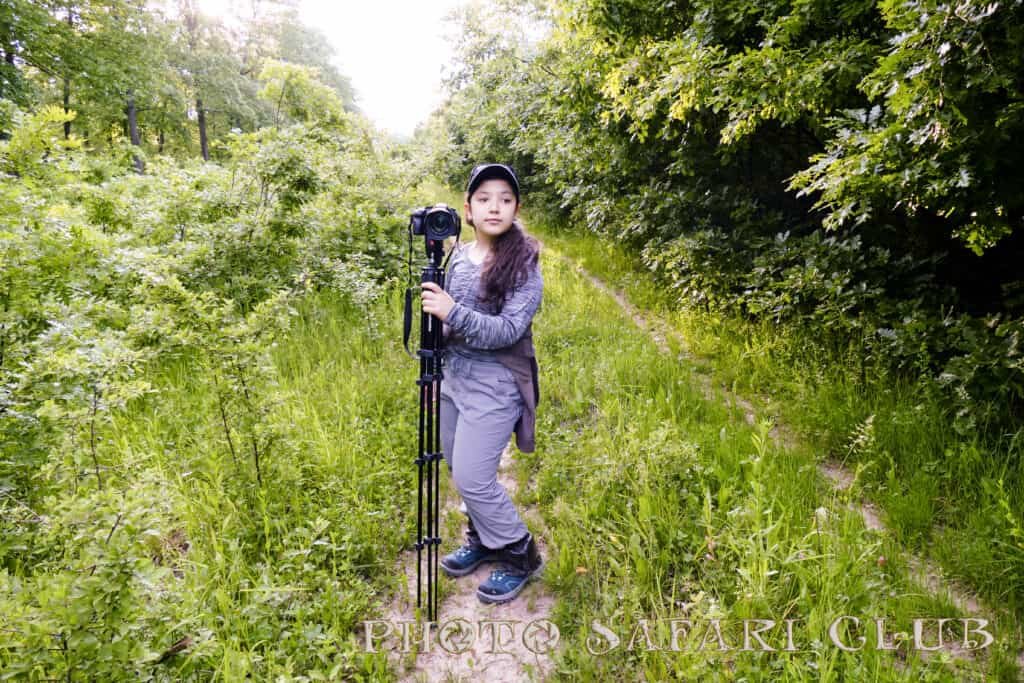
The subsequent day was my turn to assume the role of the primary photographer. In the Photo Safari Club, age is no barrier to membership. I, the youngest photo huntress of a mere seventeen years, was about to embark on my second photo safari. The only prerequisite for membership in the Photo Safari Club is an inherent love for nature and photography.
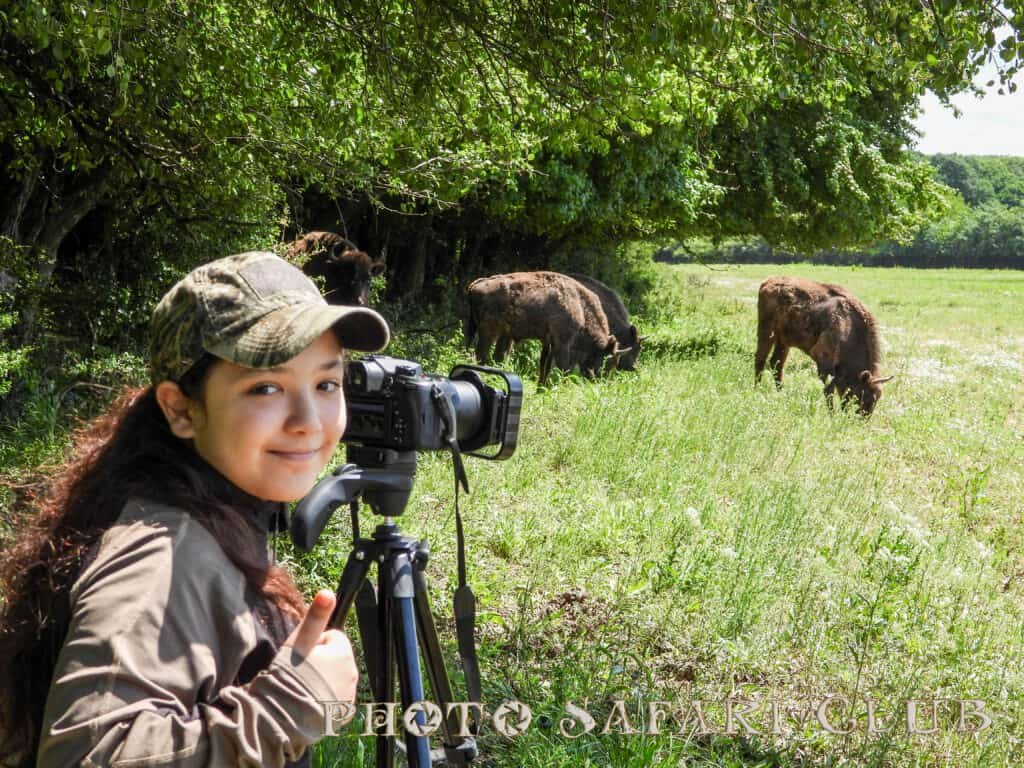
On the exhilarating second day of our safari, our entire focus shifted to the ultimate quest: capturing the awe-inspiring European bison on camera. These majestic creatures, teetering on the brink of extinction, held a profound place in our hearts. With a renewed determination, we embarked on an extraordinary adventure, guided by the local rangers who possessed an intimate understanding of the bison’s elusive habits and their secluded habitats.
The bison, known for their untamed nature and typical aversion to human presence, made a captivating exception in our case. Our seasoned guide and the familiar wagon were not only welcomed but eagerly anticipated by the bison herd. These magnificent animals heavily relied on the delivered sustenance to survive the harsh winters. Leveraging this cunning strategy, we aimed to entice the herd closer to us, though the question lingered: would they truly embrace our presence within their majestic domain? Our thrilling journey through the enchanting forest, aboard the wooden cart, treated us to a mesmerizing spectacle—an enchanting colony of Bee-eaters, adorned in resplendent hues, captivating our senses. These agile aerial hunters posed an exhilarating challenge for any photographer, demanding quick reflexes and an artistic eye to capture their fleeting beauty.
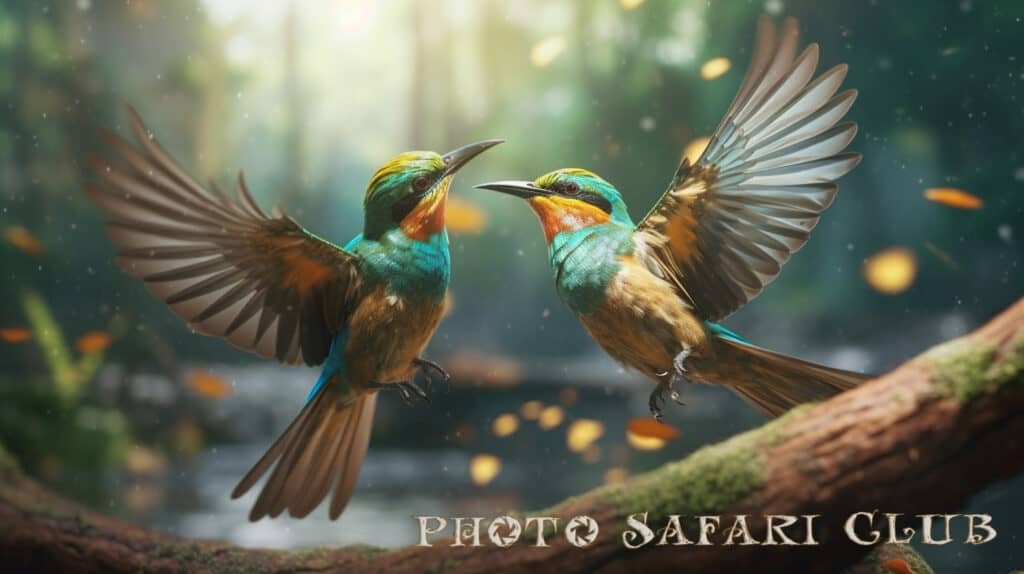
The famed Bee-eaters, renowned for their vibrant plumage, outshone all other bird species with their astonishing array of colors. Their feathers showcased an extraordinary spectrum of hues and shades, leaving us spellbound by their iridescent brilliance. During our unforgettable encounter, we reveled in the sheer diversity of colors exhibited by these diminutive avian wonders. Their crowns and throats adorned in saturated blues, blue-greens, and deep purples, came to life during their captivating mating displays and enchanting social interactions. The intricate nanoscale structures within their feather barbules contributed to the unparalleled breadth of colors, establishing the Bee-eater as the epitome of avian grandeur. As we observed the Bee-eaters darting through the forest, their agile movements and breathtaking aerial prowess left us in a state of absolute awe. Capturing their elusive beauty on camera proved to be the ultimate test of skill and patience. Their swift flight and sudden changes in direction necessitated anticipating their every move, adjusting focus in an instant. However, the gratification of immortalizing these magnificent creatures in photographs was a reward that surpassed all challenges.
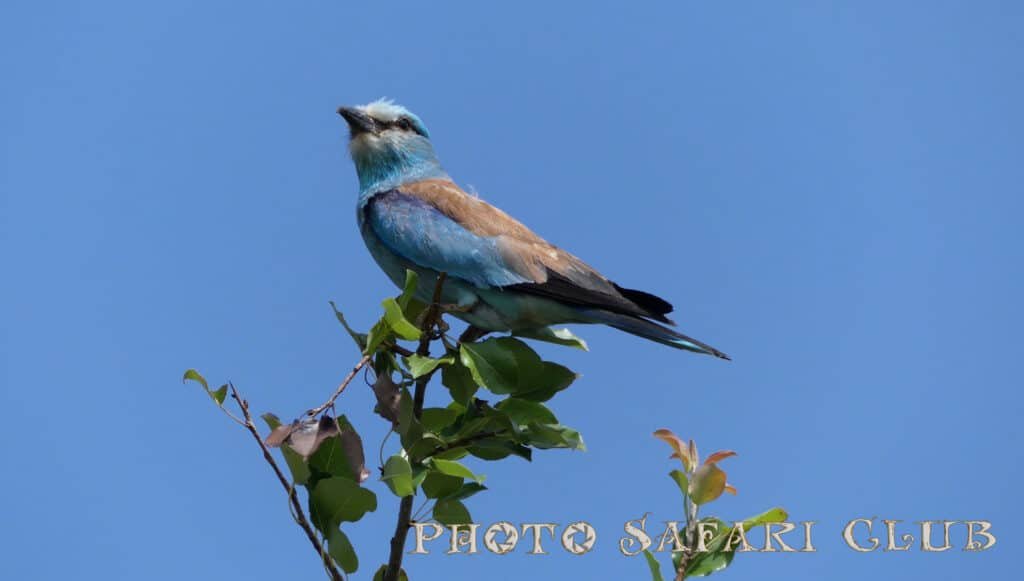
In the resplendent presence of the Bee-eater’s vibrant colors, we were reminded of the boundless wonders of nature. These creatures, with their exquisite plumage and extraordinary abilities, stood as a testament to the intricate beauty that thrives even in the remotest corners of our world. Our encounter with the mesmerizing Bee-eater colony served as a humbling reminder of the countless marvels awaiting discovery in the untamed wilderness. A remarkable interconnection emerged, as Bee-eaters and bees shared their place within the same intricate food chain. Surprisingly, despite their imposing size, bison themselves served as a source of sustenance for insects even smaller than bees. And soon, we found ourselves witnessing an awe-inspiring spectacle at the field’s edge, right by the forest’s fringes. Ticks and flies, known nuisances, sought relief in dust baths, a ritual exclusively performed by bison. Our knowledgeable guide informed us that bison, unlike deer or pigs, sought solace in dry, dusty baths and the rough, ridged bark of trees to rid themselves of pesky vermin.
After an exhilarating hour spent on the creaky cart, the concealed herd revealed itself amidst the shadows of the towering trees. The moment of truth had arrived, filling the air with electrifying anticipation. Would these majestic animals permit us to disembark from the wagon and join them in their realm, or would they retreat into the impenetrable thickets, leaving us longing for a closer encounter? The excitement reached a crescendo as our cunning wagon ruse worked its enchantment. The bison, rather than being fearful, were consumed by curiosity. Gradually, the herd grew familiar with our presence, and their daily routines resumed as if we were part of their untamed world.
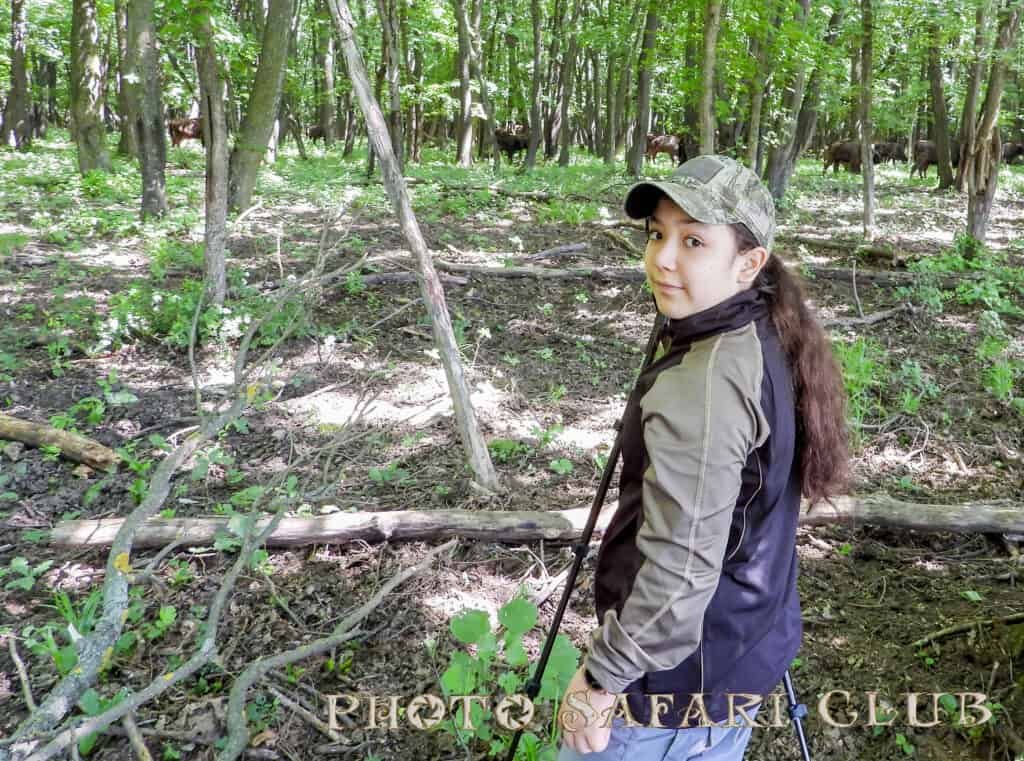
In addition to capturing the bison grazing and utilizing tree bark for deworming, we hungered for the opportunity to witness and photograph their epic battles. After all, this species was renowned for its indomitable spirit and fierce nature. Suddenly, the moment we had been waiting for arrived. We found ourselves surrounded by the colossal herd, their massive forms converging at the edge of the forest, beckoning us to follow them into the lush meadows beyond. An audacious decision seized me—I altered my perspective and ventured into the meadow, unwittingly finding myself a mere 15-20 meters away from these untamed behemoths. Fear was absent; I was exhilarated, immersed in the presence of these giants. Meanwhile, my father, positioned 10 meters behind me, remained vigilant, ever watchful for any signs of danger. Yet, to our astonishment, the bison remained serene, seemingly sensing the admiration and reverence with which we regarded them. This unique encounter was a privilege reserved for a select few photo hunters in their lifetime. The wise words of my father echoed in my mind, as he had prepared me from a tender age for encounters with the wild inhabitants. These meetings were reserved for those with both means and courage. I vividly recalled his instructions and felt compelled to share them with you. Be cautious—these thrilling moments, brimming with adrenaline and raw emotions, can expose photo hunters to inherent risks. Approaching wild animals at such close proximity demands unwavering respect and caution, for they are inherently unpredictable and possess the potential for danger. Even the most timid males can be incited to aggression by intimidation or provocation.
As I captured the essence of these forest giants through my lens, my thoughts drifted to the story that led these creatures to stand before me. The European bison, on the precipice of extinction during World War II, arose from the surviving specimens in zoos following their decimation in Poland and Belarus. The bison we beheld today were the descendants of those few resilient individuals. The effects of inbreeding within the herd were apparent, evident in the abnormalities and mutations that afflicted these magnificent creatures. Twisted horns and glaucoma were among the hereditary challenges they faced.
In the midst of our awe, two bison emerged, preparing for a formidable clash, igniting the air with anticipation. While this species had been rescued from the brink of oblivion, their survival in territories influenced by human interests remained uncertain. Genuine untamed lands, unencumbered by human endeavors, were becoming increasingly scarce. Only an unwavering commitment to preserving the wild and unspoiled nature could secure the future of the bison. May this photo safari serve as a resounding reminder to all who bear witness that these majestic creatures still roam the forests, awaiting advocates to speak on their behalf.
Day 3: Serendipitous Encounters
As our extraordinary safari drew to a close, unexpected encounters graced our path, infusing an extra dose of enchantment into our journey. In the soft glow of the early morning light, we stumbled upon a group of fallow deer, gracefully leaping through a sun-drenched glade. Their elegance and nimbleness left us breathless, and I seized the fleeting opportunity to capture their ephemeral beauty. Later in the day, we came face-to-face with a playful family of wild boars, their antics and heartwarming camaraderie spreading joy in our hearts. Click after click, I immortalized these precious moments, as if freezing time itself to preserve the harmonious bliss that nature so generously bestowed upon us.
Conclusion: A Tapestry of Nature's Grandeur
As the sun gracefully descended, painting the sky in hues of fiery gold, our three-day photo safari left an indelible mark on my soul. We had been privileged witnesses to nature’s magnificent tapestry, capturing its splendor through the lens of our cameras. The European bison, red deer, fallow deer, and wild boar had transcended mere subjects of our photographs—they had become symbols of resilience, beauty, and the delicate equilibrium of life itself. Our journey had not only gifted us with stunning images, but had also deepened our understanding and reverence for the natural world. We emerged from this adventure with a profound sense of gratitude and awe, forever transformed by the wonders that unfolded before our eyes.
To top off the extraordinary experience in nature, the next day we even had the opportunity to participate in a truffle hunt with a dog and visit an extraordinary church in the village of Drinovo. Every nature photo safari is accompanied by an inevitable introduction to the local culture and historical heritage, which the Bulgarian people can be proud of as one of the oldest nations in Europe.
Embarking on a truffle hunt in this remarkable country entails a captivating adventure that typically spans a few hours of exploration in the field, interspersed with delightful playtime breaks for the dogs.
Renowned for their exquisite aroma and distinct flavor, Bulgarian truffles have earned a well-deserved reputation among connoisseurs and culinary enthusiasts. Truffle hunting is a cherished tradition that combines the thrill of the chase with the anticipation of unearthing these culinary treasures. As you set off on your truffle hunt, accompanied by experienced guides and their remarkable canine companions, the enchantment of the natural surroundings becomes palpable. The dogs, highly skilled in detecting the elusive truffle scent, eagerly lead the way through lush forests or fertile truffle orchards, their tails wagging with excitement. In the midst of this thrilling pursuit, there are moments of respite when the dogs pause for playtime. These breaks provide a delightful interlude, allowing you to witness the remarkable bond between the dogs and their handlers. As the dogs frolic and revel in the joy of the hunt, their playful energy infuses the atmosphere with an infectious sense of camaraderie and lightheartedness. Resuming the search, the keen senses of the truffle-hunting dogs guide you to the precise spots where these elusive fungi lie hidden beneath the earth's surface. With each successful discovery, the thrill intensifies, knowing that you are on the cusp of unearthing a culinary treasure that will tantalize your taste buds. Once the dogs have pinpointed a truffle, skilled truffle hunters delicately excavate the precious find. The earthy aroma fills the air as the truffle is carefully extracted, revealing its distinctive shape and texture. This remarkable moment represents the culmination of the truffle hunt, where nature's gift is finally unveiled. Back at the truffle hunting base, culinary experts are ready to showcase the culinary versatility and enchanting flavors of these exceptional truffles. Whether incorporated into delectable dishes or used as the star ingredient in gourmet recipes, Bulgarian truffles elevate the dining experience to extraordinary heights. The truffle hunt in Bulgaria is not merely a culinary adventure; it is a celebration of nature's bounty and a testament to the dedication of those who have mastered the art of truffle hunting. Immerse yourself in the thrill of the hunt, savor the playtime breaks with the dogs, and savor the culmination of your efforts as you indulge in the exquisite flavors of Bulgarian truffles—an experience that will leave an indelible impression on your senses and palate.
The church in Drinovo village stands as a testament to Bulgaria's rich history, architectural beauty, and cultural heritage. Its significance extends beyond its religious function, captivating visitors with its historical value and aesthetic appeal. As an important cultural landmark, the church of Drinovo village continues to inspire awe, foster community spirit, and preserve the region's unique identity.
If you harbor a yearning for such an extraordinary adventure, do not hesitate to seek us out. We stand ready to help you capture your wildest moments.